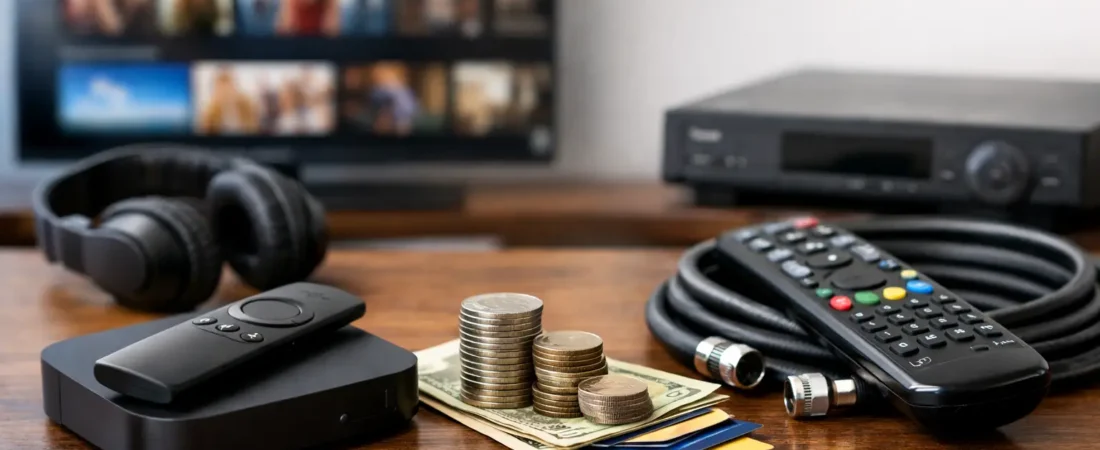
A lot of households switch to streaming expecting a big monthly win, then look up three months later and realize they are paying for five apps, faster internet, and a live TV bundle that looks a lot like cable. That is why streaming vs cable costs is not a simple cheaper-or-not question. The real answer depends on what you watch, how many people share the account, and whether your current internet setup can handle it.
For most people, streaming can cost less than cable, but only if you manage it on purpose. If you want every sports channel, local stations, premium shows, and unlimited convenience, the gap gets smaller fast. In some homes, cable still ends up being the cleaner deal.
Streaming vs cable costs: the real monthly comparison
A basic cable package often starts with an advertised rate that looks manageable, then climbs once you add broadcast TV fees, regional sports fees, equipment rentals, taxes, and the end of any promotional pricing. A package that looks like $70 per month can easily land closer to $100 to $140 once the full bill shows up.
Streaming works differently. Instead of one large bundle, you build your own stack. A household might pay for one or two low-cost on-demand services and stay well under a cable bill. But if you add a live TV streaming service, a sports add-on, a premium movie app, and a couple of kid-friendly subscriptions, the total can move into cable territory.
A common low-cost streaming setup might run around $25 to $50 per month. That usually means a few on-demand platforms and no full live TV package. A more complete streaming setup with live channels often lands in the $80 to $130 range. That is where people start to notice the overlap with cable pricing.
The biggest difference is flexibility. With streaming, you can cancel, rotate, or trim services month to month. Cable is usually less flexible, even when there is no long contract.
Why streaming often looks cheaper at first
Streaming prices are easier to understand upfront. You see a monthly number for each app, and that feels more transparent than a cable bill loaded with line items. For households that mostly watch a few shows, movies, and some kids content, streaming usually wins on price.
It also helps that you may not need rented TV equipment. Cable often charges for set-top boxes, DVR service, or extra room access. Streaming can run through devices you already own, like a smart TV, Roku, Fire TV, Apple TV, tablet, or game console.
That said, cheaper does not always mean better value. If streaming makes everyone in the house fight over buffering, weak Wi-Fi, or limited screen access, those savings can feel less meaningful pretty quickly.
The hidden costs that change the math
This is where the comparison gets more honest. Cable has obvious extra fees, but streaming has its own version of hidden costs.
The first one is internet. If you cut cable and move fully to streaming, your internet connection becomes more important. A household with one or two casual viewers may do fine on a moderate speed plan. A family with multiple 4K TVs, video calls, gaming, and smart home devices may need a faster tier or better home Wi-Fi. That can raise your monthly bill, especially if you were previously using a lower-speed plan because TV came through coax and a cable box.
The second hidden cost is hardware. Many homes discover that their ISP-provided gateway does not deliver great Wi-Fi to the back bedroom, basement, or upstairs TV. When that happens, streaming itself is not the problem, but the network becomes the weak link. Upgrading to a better router or mesh system can be a smart one-time purchase, yet it is still part of the real cost of switching.
The third hidden cost is subscription creep. One service becomes three. Then sports season starts. Then someone wants ad-free. Then another person wants a separate profile-friendly app. It happens quietly, and suddenly your clean little streaming bill has grown by $40 or $60.
When cable still makes sense
Cable is not always the overpriced option people assume it is. For some households, it still works well.
If you want local channels, regional sports, national sports, news, and a large channel lineup in one place, cable can be simpler. You get one interface, one bill, and less app-hopping. That convenience matters, especially for families or older users who do not want to manage six logins and multiple subscriptions.
Cable can also be competitive when bundled with internet. Some ISPs price TV and internet together in a way that narrows the difference between cable and live TV streaming. If the bundle includes promotional discounts and you were already paying for unlimited data or a high-speed plan, cable may not be far off from a comparable streaming setup.
This is especially true for sports-heavy homes. Once you try to replace a full cable sports lineup with streaming, the bill often rises fast.
When streaming saves the most
Streaming usually delivers the best value when your household watches selectively instead of trying to recreate cable. If you mainly watch a few current shows, movies, some on-demand library content, and maybe occasional live events, you can keep costs meaningfully lower.
It also works well for people who are willing to rotate services. Watch one platform for a month or two, cancel it, and switch to another. That approach keeps content fresh without paying for everything all year.
Another good fit is the household that already has strong home internet and decent Wi-Fi coverage. If your network is stable, adding streaming does not force you into extra hardware or expensive troubleshooting. That makes the savings more real.
Streaming vs cable costs for different household types
A single person or couple that does not care much about live sports can usually save with streaming. A few on-demand services and a basic antenna for local channels may be enough.
A family with kids often lands somewhere in the middle. They may need multiple subscriptions because everyone watches different things, but they can still save if they skip a live TV package and avoid too many add-ons.
A sports-focused household is where streaming gets tricky. If you need local games, league networks, ESPN, and national broadcasts, replacing cable can become expensive and frustrating. In that case, cable may still be the better fit, or at least not the obvious loser on cost.
A work-from-home household should also think beyond subscription prices. If reliable connectivity matters for your job, the right internet plan and home network equipment are part of the decision. Saving $20 on TV is not much of a win if your video calls freeze every afternoon.
How to decide which one is cheaper for you
Start with your current total, not the advertised cable rate. Pull out your real bill and count everything, including TV fees, equipment charges, and taxes. Then build a realistic streaming total based on what your household would actually subscribe to, not the fantasy version where everyone agrees to live with one app.
Next, factor in internet. If you already have a solid internet plan for your household size, great. If switching to streaming means upgrading speed, removing a data cap, or fixing poor Wi-Fi with a better router, include that too.
Then ask one practical question: are you trying to replace cable exactly, or are you trying to spend less? Those are different goals. If you try to duplicate the full cable experience with streaming, the savings may be small. If you are willing to be selective, streaming usually comes out ahead.
For readers dealing with spotty Wi-Fi, this is also where RouterForMyISP-style thinking matters. The TV choice and the network choice are connected. A cheaper streaming setup only feels cheaper if your internet equipment can support it without constant buffering and dead zones.
The better choice is the one you will actually manage
There is no universal winner in streaming vs cable costs. Streaming gives you more control, but it also asks you to pay attention. Cable costs more in many cases, but it can still be worth it for households that want simplicity, sports, and fewer moving parts.
The smartest move is to build around your real habits instead of the sales pitch from either side. If you can keep your subscriptions lean and your home internet reliable, streaming is often the better value. If your household wants everything in one place and uses it heavily, cable may still earn its spot on the bill.
A good monthly budget is not about picking the trendier option. It is about paying for the version of TV and internet that causes the fewest headaches at home.